

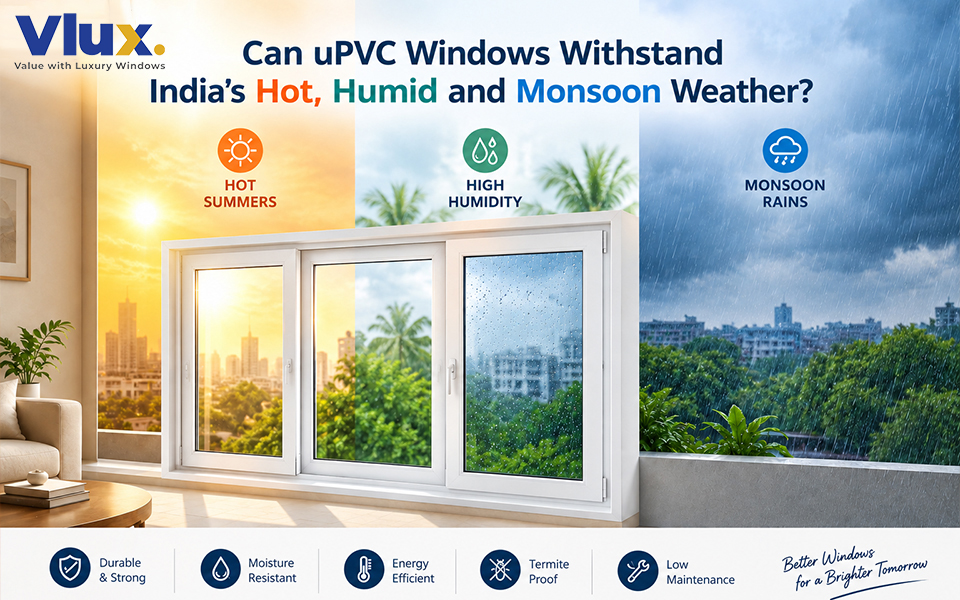
India experiences a wide variety of weather conditions throughout the year—from intense summer heat and high humidity to heavy monsoon rains and strong coastal winds. Because of these changing conditions, choosing the right windows and doors is important for maintaining comfort, energy efficiency, durability, and protection inside your home.
One increasingly popular option for modern Indian homes is uPVC windows and doors. But can uPVC really withstand India’s hot, humid, dusty, and rainy climate?
The answer is yes. High-quality uPVC windows are designed to provide excellent performance in a wide range of weather conditions. With the right profile, glass, hardware, installation, and drainage system, uPVC windows for Indian climate can offer long-lasting performance while helping improve indoor comfort.
Why Is uPVC Suitable for the Indian Climate?
uPVC, or unplasticized polyvinyl chloride, is a strong and low-maintenance material commonly used for manufacturing modern windows and doors. Unlike traditional materials that may require frequent maintenance, high-quality uPVC profiles are designed to resist moisture, corrosion, termites, and everyday weather exposure.
For Indian homes, this makes uPVC windows and doors a practical choice for different climatic regions.
Whether your home experiences hot summers, humid coastal weather, heavy rainfall, or dusty conditions, properly designed uPVC windows in India can help provide reliable performance throughout the year.
1. Protection Against India’s Hot Summer
During summer, several parts of India experience very high temperatures. Direct sunlight through windows can increase indoor heat, making rooms uncomfortable and increasing dependence on air conditioning.
One of the major benefits of uPVC windows is their insulating capability. uPVC profiles combined with suitable glazing can help reduce heat transfer between the outside and inside of a building.
This can help:
- Reduce unwanted heat entering the home
- Maintain a more comfortable indoor environment
- Improve thermal insulation
- Reduce dependence on air conditioning
- Support better energy efficiency
For homes in regions with intense summer temperatures, choosing the right energy-efficient uPVC windows and suitable glass can make a significant difference.
2. How uPVC Windows Handle Humidity
Humidity is another major concern in many parts of India, particularly in coastal and tropical regions.
Excess moisture can affect certain traditional window materials over time. Wooden windows, for example, may require regular maintenance to prevent issues related to moisture, swelling, or deterioration.
High-quality uPVC is naturally resistant to moisture and does not absorb water like wood. This makes uPVC windows for humid climates a suitable option for homes and commercial buildings.
With proper installation and sealing, uPVC windows can help create a strong barrier against outdoor moisture while maintaining their appearance and functionality.
3. Excellent Performance During Monsoon
Heavy rainfall and monsoon conditions can expose windows and doors to significant amounts of water and wind.
A properly designed uPVC window system can help protect interiors from rainwater by using features such as:
- Multi-chambered profiles
- Weather-resistant seals
- Proper drainage channels
- Quality gaskets
- Secure locking systems
- Professionally installed frames
These features can help reduce the chances of water entering the interior during heavy rainfall.
However, the overall performance of a window depends not only on the uPVC material but also on profile quality, glass selection, hardware, drainage design, and professional installation.
4. Resistant to Corrosion and Termites
Indian homes in coastal areas can experience salty and humid air, which can be challenging for certain materials.
uPVC does not rust or corrode like conventional metal materials. It is also resistant to termite attacks, making it a practical option for homes in different parts of India.
This is one reason durable uPVC windows are becoming increasingly popular for residential and commercial construction.
5. Better Insulation for Indoor Comfort
Windows play an important role in maintaining indoor temperature.
Poorly insulated windows can allow heat to enter during summer and allow conditioned air to escape. This can increase the workload on air-conditioning systems.
Energy-efficient uPVC windows can provide thermal insulation that helps reduce unwanted heat transfer.
When combined with appropriate double glazing or other suitable glass options, a uPVC window system can further improve thermal performance depending on the building’s location and design requirements.
6. Helps Reduce Outside Noise
Urban Indian homes often face noise from traffic, construction, businesses, and other outdoor activities.
The combination of a well-designed uPVC frame, proper sealing, and suitable glazing can help reduce the amount of external noise entering a room.
This makes uPVC windows and doors a useful choice for apartments, villas, offices, and homes located in busy urban areas.
For locations where noise reduction is a major requirement, the glass specification should be selected according to the desired acoustic performance.
7. Low Maintenance for Busy Indian Homes
One of the biggest advantages of uPVC windows in India is their relatively low maintenance requirement.
Unlike wooden windows that may require periodic painting, polishing, or treatment, uPVC generally requires simple cleaning to maintain its appearance.
Regular maintenance can include:
- Cleaning the window profiles
- Cleaning the glass
- Keeping drainage channels clear
- Checking seals and gaskets
- Lubricating hardware when required
Proper care can help maintain the performance and appearance of your windows for years.
8. Suitable for Different Indian Climatic Regions
India does not have a single climate. Different regions experience very different weather patterns.
Hot and Dry Regions
In areas with intense summer heat and dusty conditions, insulated uPVC windows can help improve indoor comfort and reduce heat transfer.
Coastal Regions
Coastal areas experience high humidity, moisture, and salty air. The moisture-resistant and corrosion-resistant properties of uPVC make it a suitable material for these environments.
High-Rainfall Regions
For areas that receive heavy monsoon rainfall, properly designed uPVC windows with effective sealing and drainage systems can provide protection against rainwater.
Urban and Metropolitan Areas
In cities with traffic and high population density, uPVC windows can offer a combination of thermal insulation, noise reduction, security, and low maintenance.
9. Are uPVC Windows Better Than Wooden Windows for Indian Weather?
Both materials have their own characteristics, but uPVC offers several practical advantages for modern Indian homes.
| Feature | uPVC Windows | Traditional Wooden Windows |
|---|---|---|
| Moisture resistance | High | Requires maintenance |
| Termite resistance | Resistant | Can be vulnerable |
| Corrosion resistance | Does not rust | Not applicable |
| Maintenance | Low | Comparatively higher |
| Thermal insulation | Good | Depends on construction |
| Weather resistance | Good with quality systems | Requires regular protection |
| Design options | Multiple styles and finishes | Multiple styles |
| Long-term maintenance | Relatively low | Can require periodic treatment |
The right choice ultimately depends on the building design, location, budget, aesthetics, and performance requirements.
10. What Should You Look for When Choosing uPVC Windows in India?
Not all windows offer the same level of performance. When choosing uPVC windows for Indian climate, consider more than just the appearance or price.
Look for:
Quality uPVC Profiles
Choose profiles designed for the required climatic and structural conditions.
Multi-Chamber Construction
Multi-chamber profiles can contribute to thermal insulation and structural performance.
Quality Glass
The right glass can significantly influence heat control, daylight, energy efficiency, and acoustic performance.
Effective Sealing
High-quality gaskets and seals can help improve resistance to air and water infiltration.
Proper Drainage
Well-designed drainage channels are particularly important in areas that experience heavy monsoon rainfall.
Reliable Hardware
Strong hinges, handles, locks, and other hardware contribute to smooth operation and security.
Professional Installation
Even a high-quality window can perform poorly if it is not installed correctly. Professional installation is therefore an important part of achieving the expected performance.
Why Choose VLUX uPVC Windows and Doors?
When selecting windows for an Indian home, it is important to consider the complete window system rather than focusing only on the frame material.
Vlux uPVC Windows and Doors are designed for modern residential and commercial requirements, offering a combination of contemporary appearance, durability, insulation, security, and low maintenance.
From homes and apartments to offices and commercial spaces, Vlux uPVC windows can be considered for a wide range of applications across Indian climatic conditions.
With the right combination of uPVC profiles, glazing, hardware, sealing, and installation, Vlux can help you create window and door solutions designed around the specific requirements of your project.


