If you’ve spent any time evaluating ground-mount solar projects, you’ve encountered the fixed tilt versus tracker debate. The numbers look simple at first: trackers generate 20–25% more energy from the same panels. More energy means better returns. So why doesn’t everyone use trackers?
Because the economics are more nuanced than the yield premium suggests — and the right answer depends entirely on your project’s scale, location, land cost, and financial structure.
This is a practical comparison written for project owners, EPC contractors, and industrial buyers who need to make an actual decision — not a technical paper.
What Each System Does
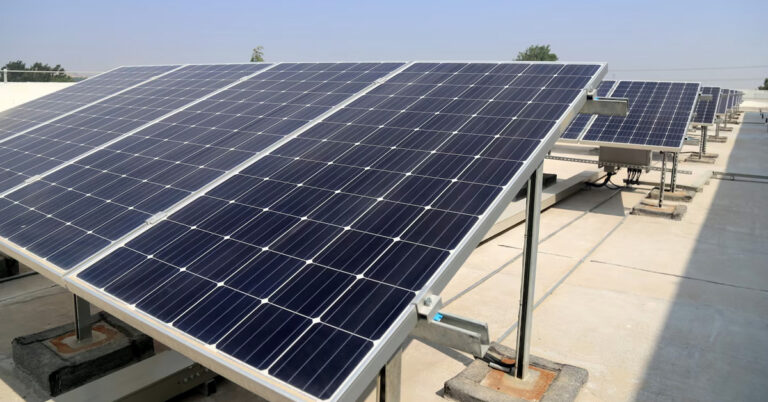
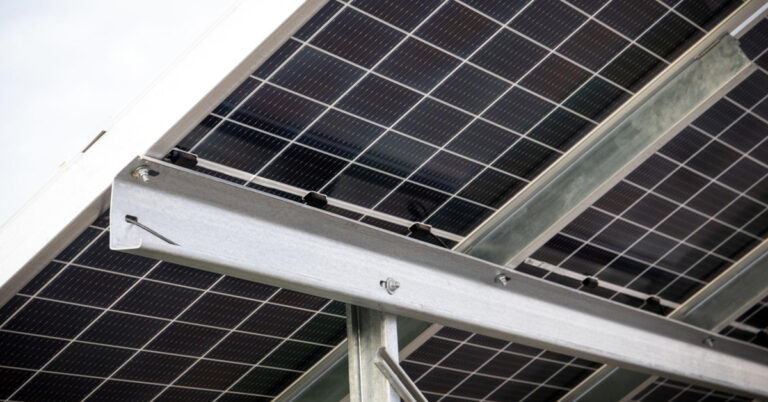
A fixed tilt ground mount is exactly what it sounds like. Steel frames hold solar panels at a fixed angle — typically between 10° and 25° in Indian installations, facing south — where they remain permanently. The tilt angle is calculated at the time of design to maximise average annual irradiance for the installation’s latitude.
A single-axis tracker rotates panels on a north–south horizontal axis throughout the day, following the sun from east to west. At sunrise, panels face east. At solar noon, they face directly upward. At sunset, they face west. A motor-driven controller system handles the rotation, typically in response to an astronomical algorithm rather than direct sun sensing.
The result: a tracker array captures morning and afternoon sunlight that a fixed system misses, adding 20–25% to annual energy output in most Indian locations.
The Real Cost Difference
Trackers cost more to install and more to operate. The premium varies, but as a general benchmark in the Indian market in 2025:
Fixed tilt ground mount structure: ₹8 – ₹14 per Wp
Single-axis tracker: ₹18 – ₹28 per Wp
On a 5 MW project, this translates to an additional ₹2–3 crore in structure cost for a tracker system. Add ongoing maintenance — motor servicing, controller calibration, occasional drive train repairs — and the total cost premium over a 25-year project life is substantial.
The question is whether the additional energy revenue over that period exceeds the additional cost. In most cases above 2 MW in flat terrain, it does. Below 1 MW, it usually doesn’t.
When Fixed Tilt Wins
Fixed tilt is the right choice in more situations than the tracker marketing material suggests.
Projects below 1 MW. The yield premium from a tracker on a 500 kW industrial rooftop or community solar project does not generate enough additional revenue to recover the cost premium within a commercially reasonable timeframe. Fixed tilt delivers better project economics at smaller scales.
Sites with irregular terrain or slope. Tracker systems require relatively flat, uniform ground. Undulating terrain, rocky outcrops, and sloped sites add significant civil cost to tracker foundations and may make trackers impractical regardless of economics.
Projects with tight capital constraints. Fixed tilt requires less upfront investment and begins generating returns faster. For project developers managing capital across multiple sites, the lower capex of fixed tilt can be the decisive factor.
Short-term land leases. Trackers have more mechanical components and longer payback periods. If land tenure is below 15 years, fixed tilt is almost always the right structure.
When Trackers Win
Single-axis trackers make compelling financial sense in a specific set of conditions.
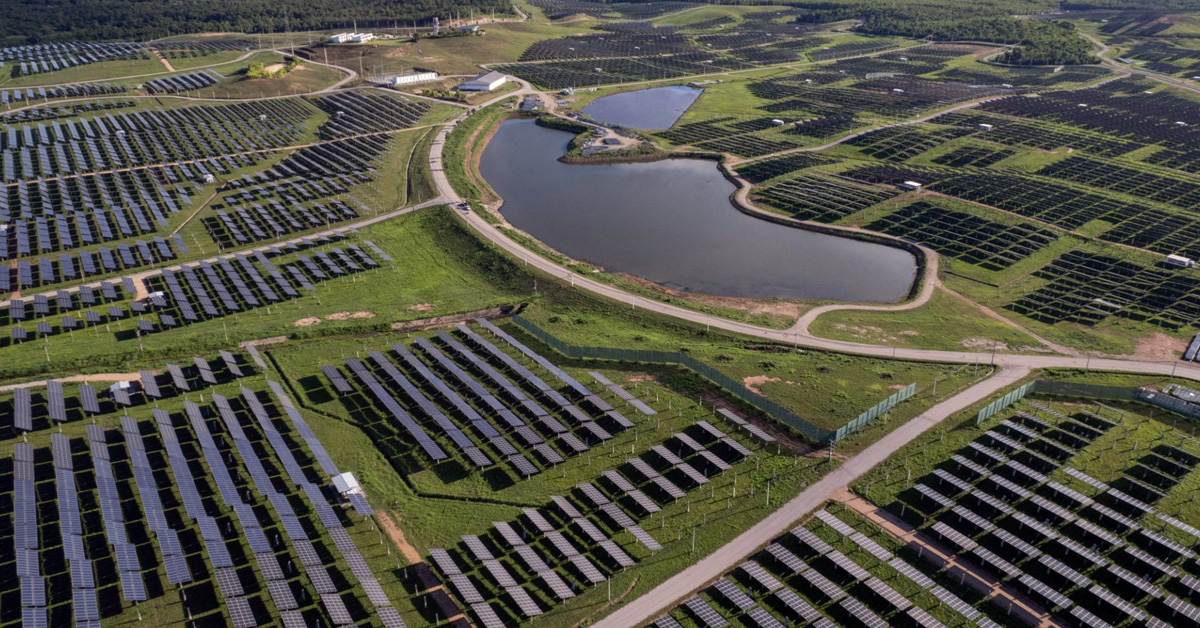
Utility-scale projects above 5 MW on flat terrain. At this scale, the additional energy generated over 25 years — typically 20–25% more than a fixed tilt equivalent — represents crores of rupees in additional revenue. The tracker premium pays back within 5–7 years in most South Indian locations and generates superior returns over the project life.
Projects where land cost is high and panel density matters. A tracker array with optimal row spacing can sometimes achieve comparable energy yields to a fixed tilt array with tighter rows — but on less land. When land lease costs are significant, this can tip the economics in trackers’ favour.
Projects selling power at competitive tariffs. At tariffs below ₹2.50/unit under competitive bidding, the additional generation from a tracker materially improves project viability. At higher tariffs, fixed tilt already delivers strong returns and the tracker premium is harder to justify.
A Note on Reliability in Indian Conditions
Tracker reliability is a real consideration in India that often gets glossed over in yield comparisons. Tracker systems have moving parts — drive motors, torque tubes, controller systems — that require periodic maintenance and occasional repair. In remote locations with limited access to specialist service, this matters.
Good tracker design minimises this risk. The most reliable systems use a single motor per row (not per panel), robust sealed drive units, and automatic wind stow functionality that moves panels to a horizontal position when wind speeds exceed a threshold. These are standard features in quality tracker systems, but worth verifying explicitly.
Fixed tilt systems, by contrast, have no moving parts at all once installed. With correct materials and installation, they require zero maintenance over their design life.
Making the Decision
The honest framework for this decision is a simple financial comparison: calculate the net present value of the incremental energy revenue from a tracker versus the incremental capital and maintenance cost, at your project’s specific tariff and over your projected tenure.
For projects above 5 MW on flat land in India, this calculation almost always favours trackers. For projects below 1 MW, it almost always favours fixed tilt. Between 1 MW and 5 MW, the answer depends on your specific conditions and the quality of the numbers you’re working with.
Vlux manufactures both fixed tilt ground mount structures and single-axis tracking systems, IS 875-certified and hot-dip galvanised for 25-year design life. If you’re evaluating a project and want an independent structural cost estimate for both options, our engineering team can help. Contact us for a free consultation.