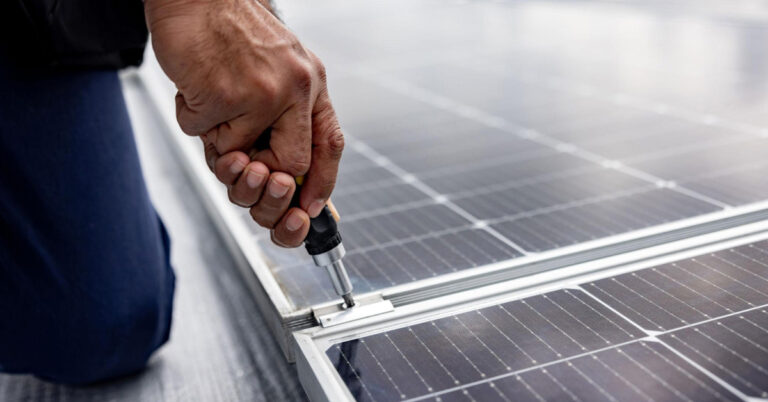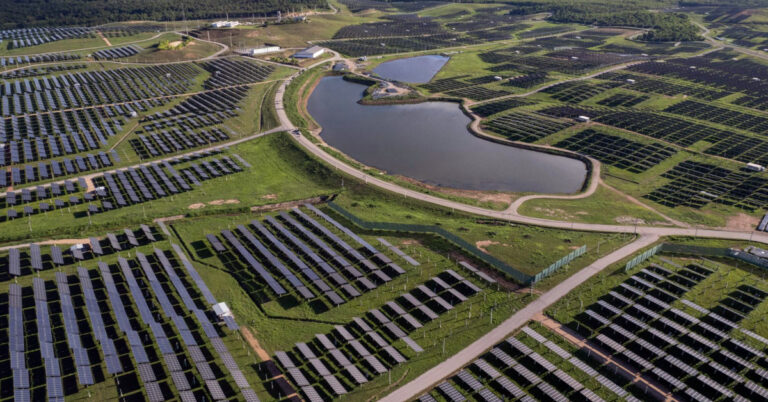
Every solar conversation in India starts the same way. Wattage. Efficiency ratings. Mono PERC versus bifacial. Brand comparisons. Price per watt. Nobody — almost nobody — asks about the structure holding everything in place.
That’s a problem. And it’s one that solar installers rarely bring up, because structures aren’t where the profit is.
This article is about the part of your solar investment that determines whether the other parts last 25 years or fall apart in seven.
What a Solar Mounting Structure Actually Does
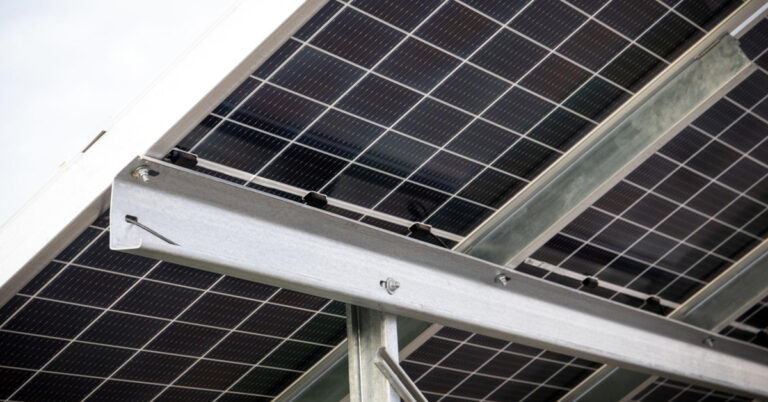
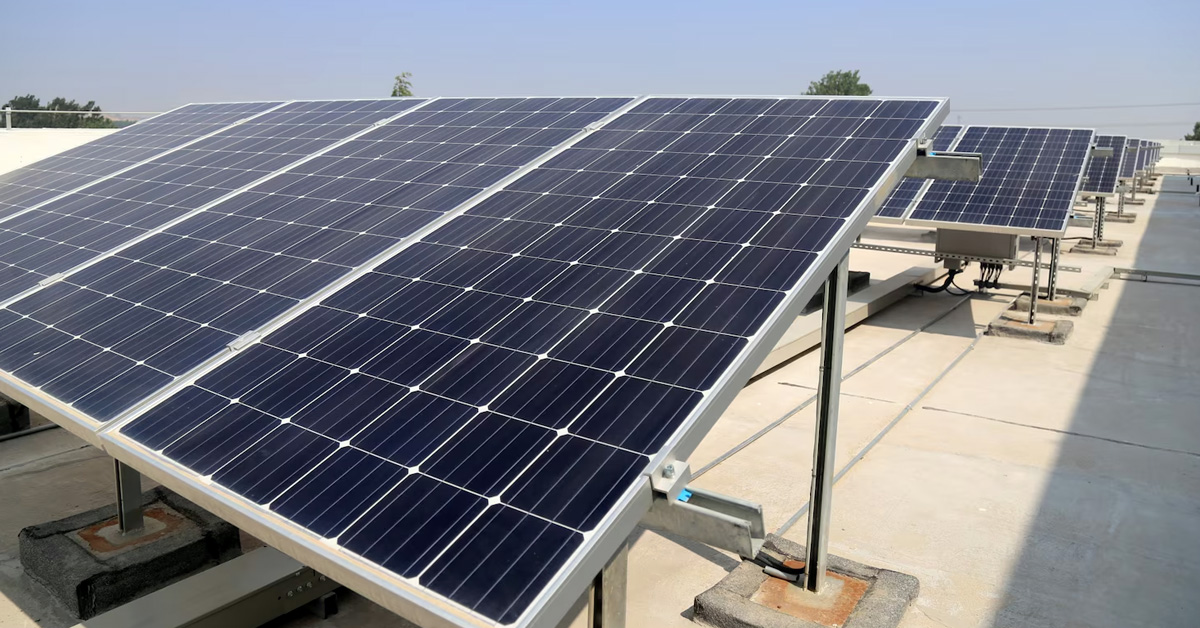
A solar mounting structure does three things simultaneously. It holds your panels at the correct angle to maximise energy generation. It withstands every weather event that India throws at it for the next quarter century. And it does all of this without damaging your roof, corroding into failure, or requiring maintenance that you’ll never actually schedule.
Simple in concept. Demanding in execution.
The structure is not passive. Every day, it absorbs thermal expansion and contraction as temperatures swing between morning cool and afternoon heat. Every monsoon, it resists wind uplift forces trying to peel panels off your roof. Every coastal day, salt-laden air attacks its metal surfaces. Every year, UV radiation and humidity test its coatings and fasteners.
Panels degrade predictably and slowly. Inverters fail electrically. But a failing structure fails structurally — and structural failures are sudden, catastrophic, and often uninsured.
What Happens When a Structure Fails
In the best case, corrosion weakens the rail connections over years. Panels shift. Energy output drops 8–12% because tilts are no longer optimal. You notice the decline on your electricity bill two years after the problem began.
In the worst case, a single monsoon wind event — and Hyderabad, coastal Andhra Pradesh, and most of South India receive wind speeds that can exceed 40 m/s during cyclonic conditions — lifts an under-engineered array and destroys panels, damages your roof membrane, and creates a falling hazard for anyone below.
Between 2018 and 2023, India’s solar sector grew explosively. Much of that growth was driven by installers competing on price. The first round of structural failures from that era is now arriving. They show a consistent pattern: inadequate steel grade, insufficient coating thickness, foundation anchors that were never sized for local wind loads.
The panels are often fine. The structure failed.
The Material Difference: What to Demand
Not all solar structures are built the same. The difference between a system that lasts 8 years and one that lasts 25 comes down to three things.
Steel grade and certification. The steel in your mounting structure should be IS 4923 certified — India’s standard for hollow steel sections used in structural applications. IS 4923 defines minimum yield strength, tensile strength, and dimensional tolerances. A structure built to this standard behaves predictably under load. One built from uncertified steel does not.
Coating type and thickness. This is where most budget structures cut corners you cannot see. Hot-dip galvanisation (HDG) is the correct process — structural steel is immersed in a bath of molten zinc, creating a metallurgically bonded coating that penetrates the steel’s surface. The minimum acceptable coating thickness for outdoor structural use in Indian conditions is 85 microns. Paint is not galvanisation. Cold galvanising spray is not galvanisation. Both provide a fraction of the corrosion protection of genuine HDG at a fraction of the cost — and a fraction of the lifespan.
Structural design to wind zone. IS 875 Part 3 is India’s wind load design standard. It maps the country into wind zones and assigns design wind speeds — from 33 m/s in sheltered inland areas to 55 m/s in cyclone-prone coastal zones. A structure designed to IS 875 for your specific location and roof height has been engineered to survive the worst wind event your site is statistically likely to experience. A structure designed to no standard at all has been sized by guesswork.
The Questions to Ask Before You Sign Anything
Before appointing any solar installer, ask these questions specifically about the structure — not the panels.
What steel grade is used, and is it IS 4923 certified? Ask to see the material test certificate, not just a verbal assurance.
What is the zinc coating thickness? The answer should be a specific number — 85 microns minimum for hot-dip galvanised steel. “Galvanised” without a micron specification tells you nothing.
Is the structural design IS 875-certified for my wind zone? Hyderabad falls in Wind Zone II with a basic wind speed of 44 m/s. Coastal locations in AP face significantly higher design wind speeds. Your structure should be designed for your location, not for a generic average.
What warranty is provided on the structure? A genuine structural warranty — covering material integrity and performance for 25 years — is only possible when the manufacturer controls the entire production process and uses certified materials. A three-year warranty from a structure reseller tells you exactly how confident they are in what they’re selling you.
Why Vlux Builds Structures the Way We Do
At Vlux, we started with a decade of manufacturing experience in precision uPVC profiles — products where dimensional accuracy, material certification, and long-term performance are non-negotiable. When we entered solar structures, we brought the same manufacturing discipline.
Every Vlux structure uses IS 4923 steel with minimum 85-micron hot-dip galvanisation. Every structural design is IS 875 Part 3 compliant for the installation site’s specific wind zone. We manufacture everything ourselves — no outsourcing, no supply chain shortcuts — because the only way to guarantee a 25-year structural warranty is to control every step of production.
Your solar panels will work hard for 25 years. Make sure the structure holding them does too.
Want to know if your existing structure meets these standards — or get a quote on a new installation? Our engineering team offers free site assessments across Telangana, Andhra Pradesh, and pan-India. Contact us to schedule yours.